
Thick, shiny hair, a radiant complexion and strong nails are a dream for many people. Such an appearance is often a sign of overall good health. Therefore, skin and hair care are very broad topics.


It may include home care, professional treatments, pharmacological approaches, and supplementation. The latter is used to compensate for nutrient deficiencies that may negatively affect the condition of the skin, nails, or hair appearance.
What are the best vitamins for healthy hair and nails? Does biotin stop hair loss? What supplements for healthy skin should you choose? We dispel any doubts.
The best vitamins for healthy hair and nails
Vitamin supplements supporting appearance are often just one element of overall care. To achieve optimal results, they should be taken at appropriate doses and combined with proper skincare, a balanced diet, and adequate daily hydration.
Deficiencies of essential nutrients, such as vitamins and minerals, affect not only our well-being. Very often, the condition of the body is reflected in the appearance of the skin, hair, and nails. If the complexion becomes dull and dry, and the hair loses its shine and starts to fall out excessively, it is likely due to dietary deficiencies.
In an ideal world, everyone would be able to balance their meals to provide all essential nutrients. Unfortunately, this is often not possible. Nowadays, such deficiencies result from a fast-paced lifestyle and low-quality food high in unhealthy fats, carbohydrates, artificial additives, salt, and sugar. Excess stress, lack of sleep, and widespread air pollution also do not help maintain healthy hair, skin, and nails.
The answer to all this may be the best vitamins for healthy hair and nails. Many of them can be found in dedicated dietary supplements.
B vitamins, vitamin A, biotin and much more
So what are the best vitamins for healthy hair and nails, and the best supplements for healthy skin? Products with a positive effect on appearance should primarily contain:
- Vitamin A. This nutrient supports skin hydration, helps prevent ageing processes, and helps regulate sebum production in the scalp, providing moisturising and nourishing effects on hair. Vitamin A also affects metabolic processes in hair follicles. With adequate intake, hair becomes nourished, strong, and shiny.
- B vitamins. They ensure the proper functioning of the sebaceous glands and participate in the production of red blood cells, which transport oxygen and nutrients to the hair follicles. B vitamins. They ensure the proper function of sebaceous glands and are involved in the production of red blood cells that transport oxygen and nutrients to hair follicles. The best vitamins for hair and nails in this group include: vitamin B5 (pantothenic acid), which supports hair growth, delays greying, stimulates keratin production, and helps hydrate the skin and reduce wrinkles; vitamin B12, which reduces hair loss, strengthens nails, and reduces dark circles and puffiness around the eyes; vitamin B9 (folic acid), which accelerates skin regeneration and improves nourishment; and vitamin B7 – biotin or vitamin H, whose positive effects on hair have been confirmed in numerous scientific studies.
- Vitamin B7. Also known as vitamin H or biotin, deserves a separate mention as it has a multi-level effect on hair, skin, and nails. It prevents excessive hair loss, stimulates new hair growth, and contains sulphur compounds with protective effects on skin, hair, and nails. It also reduces nail brittleness and has anti-acne and anti-seborrheic effects.
- Vitamin E. Known as the “vitamin of youth” due to its ability to slow down ageing processes. Vitamin E is a powerful antioxidant that reduces oxidative processes in cells, while also moisturising hair and nails.
- Vitamin C. Essential for collagen production, which is discussed in more detail later in the article. Like vitamin E, vitamin C is an antioxidant that protects hair and skin from free radicals. It also improves iron absorption, strengthening the nail plate.
Minerals. Supplements for healthy skin
As supplements for healthy skin, hair, and nails, the following essential minerals are used:
- Zinc – supports vitamin A absorption and is a valuable antioxidant. It prevents brittle nails, reduces hair loss, accelerates wound healing, and helps alleviate acne lesions.
- Copper – like zinc, has strong anti-inflammatory properties. It supports collagen and elastin production, improving skin firmness and elasticity. It also strengthens hair, enhances pigmentation, and accelerates nail regeneration.
- Iron deficiency leads to increased nail brittleness and splitting, dark circles under the eyes, increased hair loss, and faster skin ageing.
- Silicon - participates in the synthesis of collagen, elastin, and hyaluronic acid. It supports the treatment of inflammatory conditions and accelerates hair and nail growth.
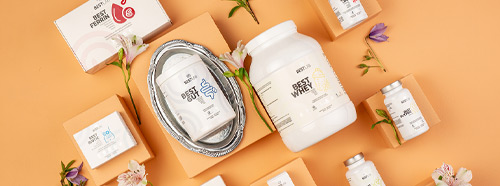
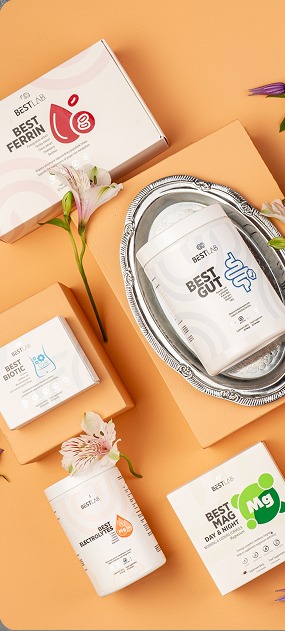
Zinc and other valuable beauty-supporting vitamins and minerals can be found, among others, in metabolic supplements from the BestLab brand. You may also use products with plant extracts such as horsetail, evening primrose, fenugreek, or bamboo shoots to improve appearance.
Hair loss supplements: reviews
Among supplements for hair loss, the aforementioned biotin (vitamin B7, vitamin H) has the most positive reviews. This ingredient is involved in keratin synthesis, the main structural protein of hair. Since keratin levels in the body do not remain stable for long, they can be supported by maintaining adequate biotin levels through supplementation. Additionally, vitamin H contains sulphur, which has beneficial effects on hair, skin, and nails.
Excessive hair loss and poor regrowth are the main reasons to consider biotin supplementation. Other reasons include:
- dull complexion with imperfections,
- brittle, fragile nails,
- smoking or frequent alcohol consumption (which accelerates biotin breakdown),
- use of certain medications, e.g. based on lipoic acid (which may cause vitamin B7 deficiency).
How to supplement this ingredient? According to the manufacturer's recommendations. Although excess biotin is excreted in urine and there is no risk of overdose, vitamin supplements should always be taken as recommended.
Biotin for hair - effects. When will they be visible?
When using biotin for hair, results will only be visible with regular supplementation. The duration of use is also significant. The minimum period to notice the first effects is three months. After six months, it is recommended to reduce the dose to 2.5 mg daily or take a one-month break.
Which supplements for healthy skin? Collagen is the key
For ageing skin, the recommended supplement is collagen. It is a structural protein that forms the foundation of connective tissue: skin, bones, and tendons. In our skin, collagen is responsible for maintaining elasticity, firmness, and structural integrity. It can be compared to a scaffold supporting the skin in good condition.
Unfortunately, as early as age 25-30, collagen fibres begin to break down. The result of this process is a loss of firmness and the formation of wrinkles.
Therefore, specialists recommend regular intake of collagen supplements. In this way, you can replenish this ingredient's deficiencies in the skin and delay the ageing process. Results should be visible after about 8 weeks of use.
For this to happen, it is worth choosing a preparation with an appropriate amount of collagen obtained from high-quality raw material. For example, BestCollagen contains a high dose of collagen peptides from the skins of wild-caught cod. It is also enriched with ingredients that support collagen synthesis: vitamin C from sea buckthorn and wild rose, MSM (organic sulphur), and vitamins A and E.
Proven supplements for acne and complexion. What to choose?
What supplements for acne and problematic skin should you choose? The selection is very wide. In such preparations, we usually find plant ingredients, including wild pansy extract, pot marigold, gotu kola, as well as coenzyme Q10, probiotics, green tea extract, black cumin or evening primrose oil, or omega-3 fatty acids.
However, mineral supplements are often the first choice among supplements for acne and complexion. Zinc is particularly recommended. It not only supports vitamin A absorption but also accelerates wound healing and helps treat acne. It is an antioxidant that protects cells from damage and promotes a healthy, radiant complexion. The second recommended mineral for acne is selenium. Like zinc, it helps reduce inflammation and regulates sebum production.
Promising acne and skin supplements also include vitamin A, which accelerates cell renewal and reduces sebum production. Oral acne supplements also contain vitamin C (with strong anti-inflammatory and wound-healing properties), vitamin E (protecting against free radicals and supporting skin regeneration), and B vitamins (depending on type – reducing sebum, soothing inflammation, or supporting healing processes).
It is worth remembering that low levels of certain vitamins and minerals promote sebum overproduction and worsen skin inflammation. In addition to supplementation, diet is important. In cases of acne, it is better to avoid sweets, spicy foods, and fast food.
Sources:
- I. Wawer, K. Paradowska, Suplementacja witamin u dorosłych [w:] Medycyna po Dyplomie 06/2018.
- Healthline. (2020). Collagen in diet: Benefits and sources. Retrieved from https://www.healthline.com/nutrition/collagen.
- M. Maciejczyk, M. Jamiołkowska, S. Prokopiuk, H. Car, Kosmoceutyki przeciwstarzeniowe o działaniu antyoksydacyjnym [w:] Dermatologia po Dyplomie, 04/2015.
- A. Kołaczek, Przegląd metod pielęgnacji skóry dojrzałej, Kosmetologia estetyczna 6/2015, s. 541-545.
- Zempleni J, Kuroishi T. Biotin. Advances in Nutrition Volume 3, Issue 2, March 2012, Pages 213–214.
- Proksch E, Schunck M, Zague V, Segger D, Degwert J, Oesser S. Oral intake of specific bioactive collagen peptides reduces skin wrinkles and increases dermal matrix synthesis. Skin Pharmacol Physiol. 2014; 27(3):113-9. doi: 10.1159/000355523.
- Chattopadhyay, S., & Raines, R. T. (2014). Collagen-based biomaterials for wound healing. Biopolymers, 101(8), 821-833