
The human body is a highly complex structure that requires specific active components for proper functioning, which participate in energy production.


This process is carried out by small organelles, the mitochondria, where cellular respiration occurs. This process produces ATP, or adenosine triphosphate, a fundamental energy molecule – without it, our body cannot function. One of the most essential components in this process is coenzyme Q10. Thanks to coenzyme Q10, energy production from food can occur within the inner mitochondrial membrane. How does coenzyme Q10 work, what are its properties, and when does it help? The answer to these questions can be found in this article.
What is coenzyme Q10?
Ubiquinone, also known as coenzyme Q10, is a naturally occurring compound in the body that plays a key role in electron transport and energy production in the human body. Coenzyme Q10 is found in virtually every tissue of the body, underscoring its importance. This also means that most tissue systems in the human body require ATP synthesis to function properly.
In addition to the mitochondrial membrane, ubiquinone, also known as ubidecanone, is found in other parts of the cellular environment. These are most often peroxisomes, the Golgi apparatus, lysosomes, peroxisomes, and the endoplasmic reticulum.
In these structures, ubiquinone acts as a stabilising factor, protecting against harmful inflammatory factors, such as proinflammatory cytokines. In other words, coenzyme Q10 is a compound that not only participates in energy production but also performs various functions supporting the body on many levels.
Coenzyme Q10 occurs naturally in the body and is produced by it. Therefore, it is obtained endogenously. However, this does not mean that we do not need to obtain it through food or appropriate dietary supplementation. It turns out that deficiencies of this nutrient are common, often due to inflammatory conditions associated with our lifestyle.
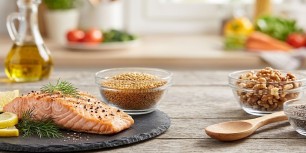
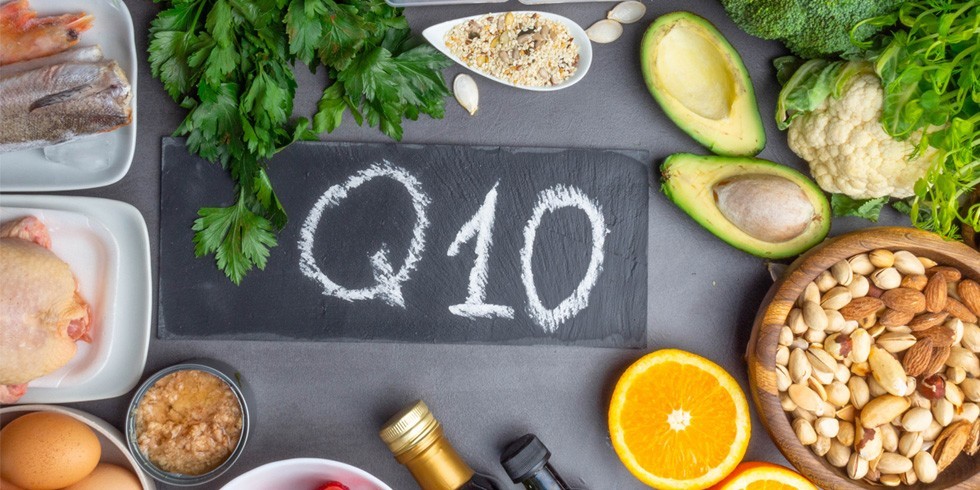
Food sources of coenzyme Q10:
- offal,
- spinach and other leafy vegetables,
- cruciferous vegetables,
- cold-pressed vegetable oils,
- oily ocean fish,
- minimally processed foods such as groats and whole grains.
Coenzyme Q10 - properties and effects
Ubiquinone is a component responsible for energy production in the body. This key property allows many human tissues to function properly, as well as a range of biochemical processes. In addition to these, coenzyme Q10 also provides other health benefits for the human body. It's worth exploring the properties and effects of coenzyme Q10.
Antioxidant Properties
Coenzyme Q10 is a powerful anti-inflammatory substance. This means ubiquinone can deactivate free radicals that damage various cellular structures. This allows ubiquinone to protect cellular structures and DNA from harmful environmental factors. This is a fundamental property given the multitude of stressors we face every day.
It supports the health of nervous and brain tissue
Mitochondria are highly concentrated in nervous and brain tissue, making them extremely vulnerable to excessive free radicals. They are therefore extremely vulnerable to the occurrence of excessive amounts of free radicals. The inflammatory process in these areas can also progress with age, increasing older people's risk of oxidative damage and neural disruption. The same phenomenon occurs in people who are stressed and have multiple metabolic problems.
These phenomena can be prevented by supplementing with coenzyme Q10 and by incorporating foods rich in this nutrient into your diet. It's also essential to modify your lifestyle to accommodate the proper regeneration needed to rebuild neural connections. Coenzyme Q10 contributes to the formation of new neural connections and the creation of new nerve cells, which will support daily cognitive function. Coenzyme Q10 also mitigates the negative effects of degenerative diseases, protecting brain tissue from further damaging effects of oxidative stress.
Cardiovascular Prevention
The cardiovascular system is highly susceptible to numerous inflammatory conditions. This is due to most people's dietary habits. This leads to oxidative damage and lipid oxidation, which increase the risk of atherosclerosis in the cardiovascular system. Coenzyme Q10 supplementation helps reduce toxic and harmful cholesterol levels, which damage vascular structure and contribute to vascular narrowing, leading to venous insufficiency. Ubiquinol, a more active form of coenzyme Q10, counteracts this effect and helps prevent damage to this system and the tissues within it.
It supports fertility
Oxidative damage not only negatively impacts tissue function but can also negatively impact fertility, sperm production, and egg function. Coenzyme Q10 supplementation significantly improves sperm motility and activity and reduces oxidative damage in egg cells, translating into a greater likelihood of success in conceiving and a growing libido.
Improved Appearance of Skin and Appendages
The skin, like other superficial tissues, is susceptible to the ageing process, i.e., oxidative stress-induced damage. This damage leads to loss of collagen and hyaluronic acid, as well as the degradation of structural proteins. In this case, coenzyme Q10 effectively regenerates damaged structures, strengthens the condition of hair and nails, and promotes faster collagen regeneration. Coenzyme Q10 supplementation has also been shown to reduce damage resulting from excessive UV radiation to the skin.
Potential Effect on Reducing Headaches
Weakening the motor system and nerve signals by reducing calcium uptake at synapses can promote oxidative damage, leading to microcirculation disorders. Coenzyme Q10 reduces this damage and also influences the process of autophagy, or mitochondrial recycling, which involves replacing dysfunctional mitochondria with new, functional ones. This effectively improves cerebral microcirculation and reduces migraine and headache frequency.
Supports athletic performance
Physical activity is an essential element of a healthy lifestyle that serves as a preventive measure and contributes to improved health and physique. Exercise should be performed regularly and gradually. This is not possible in the presence of excessive muscle microdamage and oxidative stress. Coenzyme Q10 contributes to accelerated regeneration by reducing the levels of markers of muscle damage and has a beneficial effect on muscle strength, endurance, and performance.
It protects against the effects of diabetes
Oxidative damage is also detrimental to pancreatic function and carbohydrate metabolism. Improper lifestyle and dietary habits can further contribute to damage to this organ and impaired insulin secretion. Such behaviours lead to the development of type I and II diabetes. This situation can be effectively prevented by supplementing coenzyme Q10. It improves insulin sensitivity, reduces pancreatic damage, and regulates blood glucose levels.
Coenzyme Q10 may also support cancer patients. It is believed that coenzyme Q10 accelerates the programmed death of cancer cells, also known as apoptosis. In this case, ubiquinol or ubiquinone is thought to improve patient prognosis, reduce the risk of metastasis, and reduce inflammation.
Ubiquinone vs. ubiquinol – which version of coenzyme Q10 is better?
On the supplement market, there are two available forms of coenzyme Q10: ubiquinol and ubiquinone. Both substances are structurally similar, but ubiquinol is characterised by greater bioavailability and activity, which means that large doses of ubiquinol are not necessary to achieve the health benefits of coenzyme Q10 supplementation. Ubiquinone must be supplemented at higher doses to achieve effects similar to those of ubiquinol.
When is coenzyme Q10 most effective?
Taking coenzyme Q10 alone may sometimes be insufficient, as this compound, like other nutrients, requires the presence of other substances that support the action of coenzyme Q10 and improve its absorption. These include:
- Spermidine,
- PQQ,
- Magnesium,
- and carnitine (in its acetylated form).
A complex of these ingredients makes coenzyme Q10 absorption easier, while providing even greater health benefits than taking coenzyme Q10 alone.
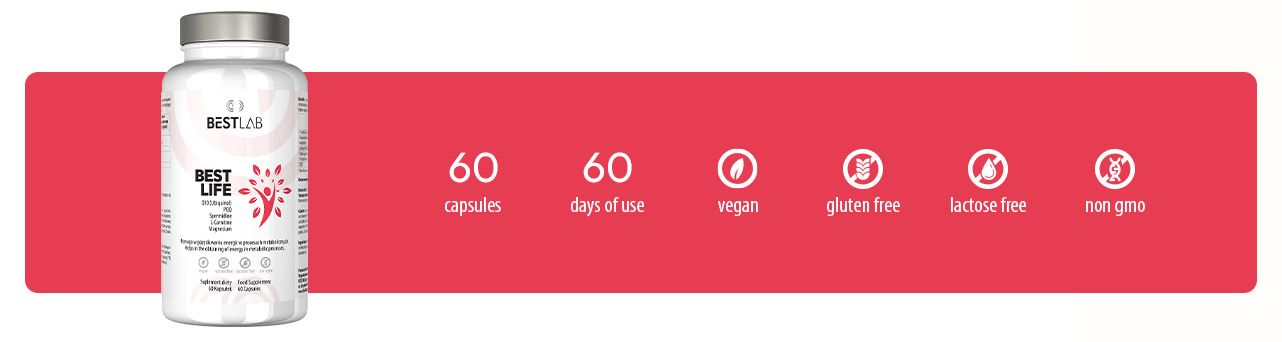
BestLAB offers a comprehensive dietary supplement containing the ingredients mentioned above, which support the action of the more active form of coenzyme Q10, ubiquinol. This product, called BestLife, contains appropriate concentrations of coenzyme Q10-associated ingredients that are safe to use and beneficial for virtually every tissue rich in mitochondria.
Moreover, BestLife is a product with a pure and tested composition, validated by studies from the renowned J.S. Hamilton laboratory. By choosing BestLife, you have a positive impact on:
- well-being,
- proper functioning of the brain and nervous tissue,
- improved libido,
- better physical condition,
- better appearance of skin, hair and nails,
- more effective prevention against lifestyle diseases and more,
- better regeneration and motivation to act.
The ingredients in the BestLife supplement are a complex of substances that comprehensively support mitochondrial health, which produce the right amount of energy for the body to function efficiently every day.
Stress and dietary habits can significantly impact the efficiency of energy production. Unfortunately, in most people, this process becomes impaired, leading to poorer mitochondrial function and increased oxidative stress. This process can be prevented by supplementing with ubiquinol, the active form of coenzyme Q10. However, it's important to note that other ingredients work synergistically with the coenzyme. A great solution is a multi-supplement from BestLAB, BestLife.
Sources
- Galluzzi L, Kepp O, Trojel-Hansen C, Kroemer G. Mitochondrial control of cellular life, stress, and death. Circ Res. 2012 Oct 12;111(9):1198-207.
- DiNicolantonio JJ, Bhutani J, McCarty MF, O'Keefe JH. Coenzyme Q10 for the treatment of heart failure: a review of the literature. Open Heart. 2015 Oct 19;2(1):e000326.
- Ben-Meir A, Burstein E, Borrego-Alvarez A, Chong J, Wong E, Yavorska T, Naranian T, Chi M, Wang Y, Bentov Y, Alexis J, Meriano J, Sung HK, Gasser DL, Moley KH, Hekimi S, Casper RF, Jurisicova A. Coenzyme Q10 restores oocyte mitochondrial function and fertility during reproductive aging. Aging Cell. 2015 Oct;14(5):887-95.
- Farage MA, Miller KW, Elsner P, Maibach HI. Characteristics of the Aging Skin. Adv Wound Care (New Rochelle). 2013 Feb;2(1):5-10.
- Yorns WR Jr, Hardison HH. Mitochondrial dysfunction in migraine. Semin Pediatr Neurol. 2013 Sep;20(3):188-93.
- Mancuso M, Angelini C, Bertini E, Carelli V, Comi GP, Minetti C, Moggio M, Mongini T, Servidei S, Tonin P, Toscano A, Uziel G, Zeviani M, Siciliano G; Nation-wide Italian Collaborative Network of Mitochondrial Diseases. Fatigue and exercise intolerance in mitochondrial diseases. Literature revision and experience of the Italian Network of mitochondrial diseases. Neuromuscul Disord. 2012 Dec;22 Suppl 3(3-3):S226-9.
- El-ghoroury EA, Raslan HM, Badawy EA, El-Saaid GS, Agybi MH, Siam I, Salem SI. Malondialdehyde and coenzyme Q10 in platelets and serum in type 2 diabetes mellitus: correlation with glycemic control. Blood Coagul Fibrinolysis. 2009 Jun;20(4):248-51.