


Vitamins A, D, E, and K are essential micronutrients that allow our body to function properly. A deficiency in any one of these nutrients can significantly impact our body's functioning, and the effects can be felt quite quickly.


Vitamins A, D, E, and K are essential micronutrients that help our bodies function properly. A deficiency in any one of these nutrients can significantly impact our body's functioning, and the effects can be felt quite quickly.
Vitamins A, D, E, and K are essential nutrients that everyone should include in adequate amounts in their daily diet. In this article, you will find information:
The role of vitamins A, D, E, and K in the body – what are they responsible for?
- Vitamin A - Action and Origin
- Vitamin D - Action and Origin
- Vitamin E - Action and Origin
- Vitamin K - Action and Origin
The role of vitamins A, D, E, and K in the body
Vitamins are divided into two groups: water-soluble and fat-soluble. Water-soluble vitamins include the B-complex vitamins and vitamin C, while fat-soluble vitamins include A, D, E, and K. Unlike water-soluble vitamins, vitamins A, D, E, and K are stored in the liver, which means they are eliminated from the body much more slowly.
Vitamins A, D, E, and K are generally readily available, and it might seem that correcting deficiencies in these vitamins is easy and quick. Unfortunately, the products we get vitamins from are often of inferior quality, and therefore, the vitamins they contain are not of the highest quality. Lack of time, a stressful lifestyle, and a tendency to eat quickly and often unhealthy foods result in a very poor supply of adequate nutrients, which impacts our body's health internally and externally.
We can achieve full vitality and health by correcting all vitamin deficiencies, which are crucial for our bodies. Vitamins often work in cooperation with each other, as is the case with vitamins A, D, E, and K, which act synergistically to support each other’s functions. A deficiency in even one of them can lead to insufficient activity of the others. On the internet and television, we often hear about combining vitamin D with vitamin K. Why has this particular combination gained so much attention, and what about the other vitamins? We should take a closer look to understand how they work and what they influence.
What are vitamins A, D, E, and K responsible for?
Vitamins A, D, E, and K are a group of highly interrelated vitamins, whose effects can be observed at nearly every level of the body’s functioning. Each of these vitamins performs specific functions, without which our immune, nervous, and muscular systems would not function properly. Vitamins A, D, E, and K can exert their beneficial effects only when consumed alongside a meal containing fat. Supplementation, even with the most expensive products, will not provide proper nourishment or “saturation” of the body with these nutrients if they are not consumed with fat. Fat serves as a carrier, allowing the release of vitamins in the digestive tract, where they can later be absorbed in the intestines and contribute to better health and well-being.
Vitamin A - Action and Origin
Vitamin A supports key aspects of proper body function. It is best known for its role in maintaining normal vision. Any diseases related to this function are, to some extent, caused by a deficiency of vitamin A. Other essential functions of vitamin A include:
- supporting proper vision – vitamin A plays a significant role in tear fluid production and helps maintain the eye cells’ sensitivity to visible light,
- impact on body growth – a deficiency in vitamin A may result in stunted or inadequate growth in children,
- supporting immune function – a weakened immune system, and therefore an increased risk of infection, results from low levels of vitamin A in the body,
- supporting hair growth – vitamin A promotes healthy hair growth and appearance; conditions such as patchy hair loss or excessive hair shedding can result from significant dietary deficiencies of vitamin A,
- protecting the skin from excessive UV radiation,
- has regenerative effects – vitamin A aids in wound healing by supporting the regeneration of epithelial cells,
- supporting reproductive functions – vitamin A aids fertility in both women and men and is also crucial for foetal development.
Vitamin A has also found its use in cosmetology, particularly in anti-wrinkle and anti-ageing creams. Additionally, the health-promoting effects of this vitamin may have anti-cancer properties.
Vitamin A can be found in animal and plant products, such as:
- butter (min 82%),
- fish liver oil,
- carrot,
- kale,
- spinach,
- yolk,
- animal liver.
Its concentration is highest in animal products.
Vitamin A influences many processes in the body, so it's essential to maintain adequate levels and maintain a regular diet rich in this trace mineral, as well as consider supplementation.
Common symptoms of vitamin A deficiency:
- dry eyes,
- hair loss,
- skin problems, skin inflammation,
- weak immunity,
- vision problems, night blindness or vision loss.
Vitamin D - Action and Origin
Vitamin D is the most popular vitamin today. Commonly called the sunshine vitamin because its synthesis occurs when we expose ourselves to sunlight. Its most important function is its impact on healthy and strong bones.
Vitamin D refers to several types of this vitamin, specifically:
- vitamin D2,
- and vitamin D3
The main difference between these two types of vitamin D is their origin. Vitamin D2 is most often found in mushrooms and plants, while vitamin D3 is found in animal products.
Vitamin D's most important functions include:
- improving the functioning of the biological clock, leading to better regeneration and more efficient rest,
- supporting weight loss,
- supporting the nervous system,
- regulating hormonal activity and blood glucose levels,
- supporting muscle strength,
- increasing bone density,
- and supporting the proper functioning of the calcium and phosphate metabolism.
Vitamin D is very difficult to obtain in adequate amounts from diet alone, which is why supplementation is recommended at every stage of life – for infants, children, teenagers, adults, and seniors. Dosage depends heavily on a person's needs and location. It's best to discuss dosages with your doctor or dietitian.
Vitamin D is found in the highest amounts in:
- marine fish oil,
- fish,
- meat,
- dairy products,
- mushrooms, vegetables,
- and eggs.
Vitamin D can be naturally produced by the body, requiring only exposure to sunlight. However, many people, by using sunscreen (rightly so), reduce the amount of vitamin D produced by the skin.
Vitamin D deficiency, although rare, can lead to:
- excessive cellular ageing,
- obesity,
- bone weakness,
- fatigue,
- osteoporosis,
- decreased strength and muscle mass,
- and a reduced autoimmune system.
Vitamin E - Action and Origin
Vitamin E is the main component that protects cells from excessive and premature ageing. It is a powerful antioxidant that neutralises the effects of free radicals. The properties of vitamin E are supported by vitamin B3 and selenium.
Vitamin E is primarily responsible for:
- reducing inflammation,
- removing free radicals, which are responsible for the proliferation of inflammatory and regenerative processes,
- preventing cardiovascular diseases,
- improving libido in both women and men,
- and is recommended for pregnant women.
- It exhibits anticancer properties,
- and supports vision.
Vitamin E's primary role is to support the immune system, but it also contributes to homeostasis on many levels. Its primary sources include:
- avocados,
- vegetable oils,
- seeds,
- fruits and vegetables,
- dairy products,
- fatty fish,
- and nut butters, such as peanut and cashew butters.
Vitamin E is easy to balance, but the lack of time to properly prepare meals makes supplementation of this particular vitamin increasingly popular.
Vitamin E deficiencies include:
- muscle weakness,
- vision problems,
- numbness in the limbs,
- and weakened immunity.
Vitamin K - Action and Origin
Vitamin K is a key element in the blood clotting process. Vitamin K is a group of fat-soluble compounds divided into two subgroups:
- Vitamin K1 (phylloquinone). It is found in plant-based foods.
- Vitamin K2 (menaquinone). This vitamin is found in animal-based foods and soy products. Intestinal bacteria produce vitamin K2 in the colon.
Vitamin K plays a key role in
- maintaining a healthy circulatory system,
- supports healthy bones,
- prevents calcification of blood vessels, which significantly reduces the risk of heart disease.
- It has antibacterial properties,
- improves the condition of hair, skin, and nails
- and has anti-inflammatory properties.
Vitamin K is found in:
- high-fat products,
- egg yolks,
- soy products,
- small amounts,
- liver,
- leafy vegetables (K1).
Vitamin K deficiency can quickly lead to excessive bleeding, even from the most minor wounds, and weaken the skeletal system. The interaction between vitamin K and vitamin D is crucial for our bodies, as both have powerful bone-building properties.
Vitamin MK7 is the form of vitamin K2 that is most readily absorbed by our bodies and is obtained through natural bacterial fermentation. Its high blood levels are maintained for a very long time thanks to its long half-life. It is found in foods such as
- soy,
- fermented foods,
- kefir,
- dairy fats (butter),
- and cashew nuts.
Vitamin K2 supplements also contain this form, as vitamin K2MK7.
Vitamin K2MK7 supports the body in:
- preventing hypertension, supporting the cardiovascular system,
- supporting the treatment of the nervous system,
- and supporting the functioning of the skeletal system.
Supplementation
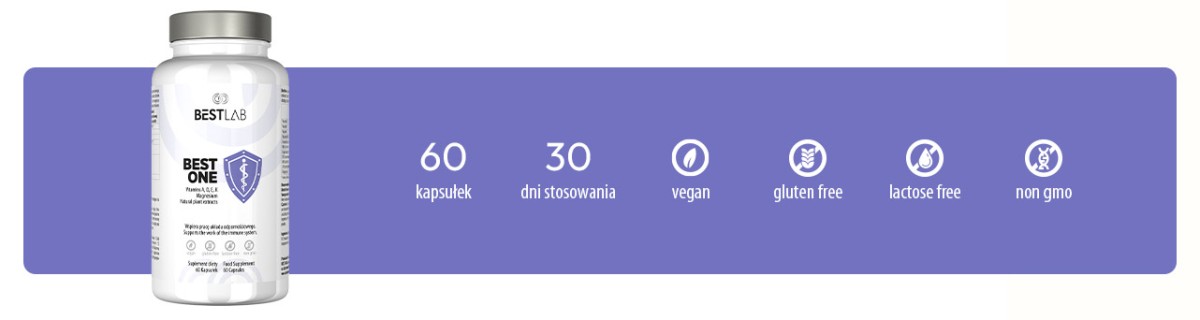
Vitamins A, D, E, and K should be taken with a meal that contains fat. Supplementation can be started with single preparations, either individual vitamins purchased separately or a multivitamin containing all the necessary vitamins in one package. A recommended option is Best One by BestLab, which provides all essential nutrients in a single dose. Additional support comes from green tea extract, which helps the body combat inflammation and supports heart function, as well as from magnesium taurate, which more effectively crosses the blood–brain barrier and benefits nervous system function. It all depends on the degree of dietary and lifestyle deficiencies. It is advisable to follow the nutritional information on the packaging and consult a doctor or dietitian to identify deficiencies better and determine an appropriate supplementation plan.
Summary
Vitamins A, D, E, and K are essential vitamins that support the proper functioning of all systems in our bodies. Each plays a key role, and together they provide powerful support for daily preventive work in bone health, immunity, and inflammation reduction. Adequate levels of vitamins A, D, E, and K are key to better overall regeneration, supporting the recovery of both the nervous and cardiovascular systems. If you constantly feel tired, your vision is deteriorating, and your stress resilience is lower, you most likely have deficiencies in vitamins A, D, E, and K. Ensure adequate levels by taking a supplement that's right for you.
Bibliography:
- https://pubmed.ncbi.nlm.nih.gov/23857223/
- https://pubmed.ncbi.nlm.nih.gov/19103647/
- https://pubmed.ncbi.nlm.nih.gov/17925053/
- https://pubmed.ncbi.nlm.nih.gov/6830261/
- https://pubmed.ncbi.nlm.nih.gov/22489224/
- https://pubmed.ncbi.nlm.nih.gov/18697901/